
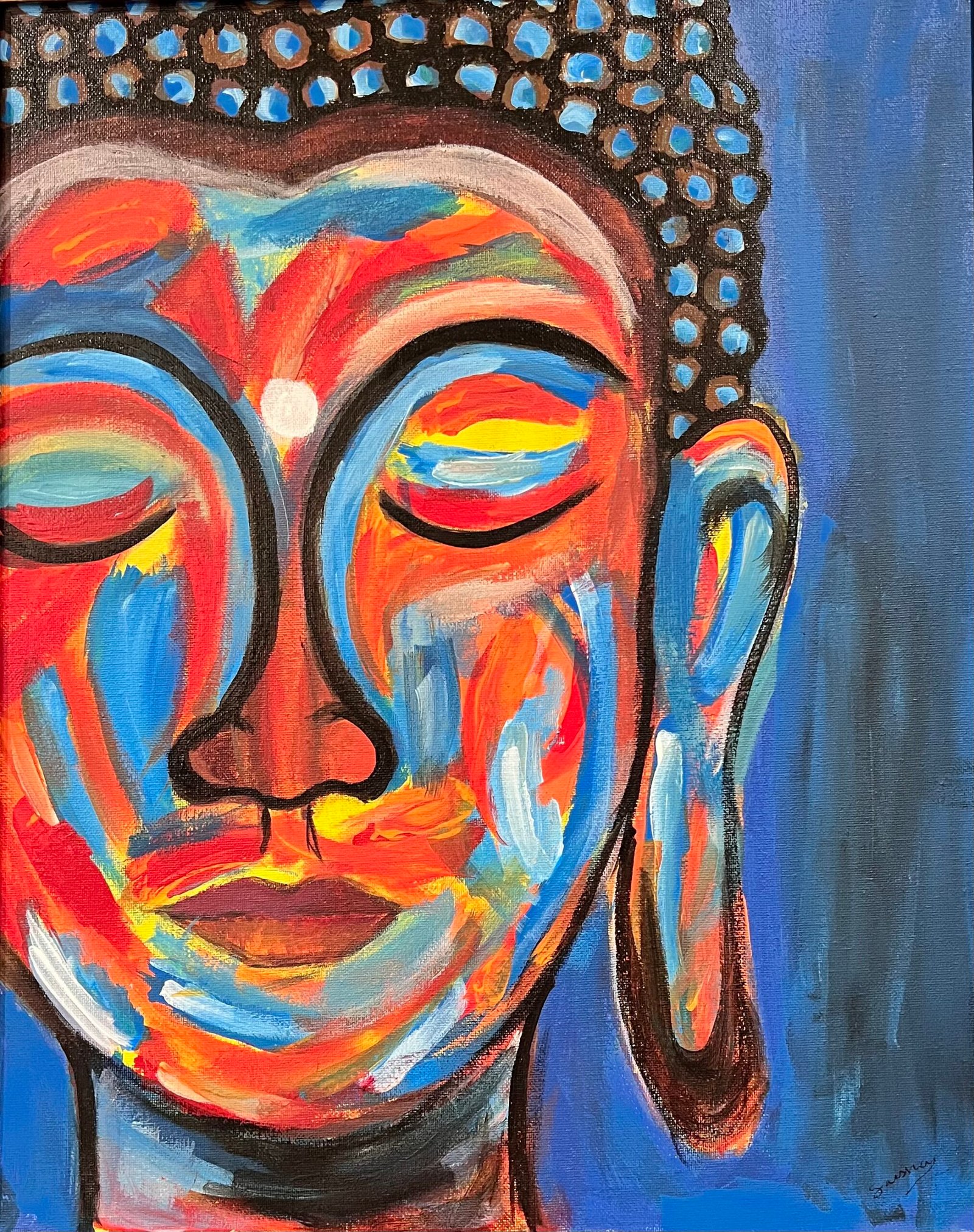
Art has long served as a bridge between spiritual philosophy and human emotion. In this vibrant acrylic painting, the serene icon of Lord Buddha is reimagined through dynamic, modern color choices, creating a powerful fusion of classical Eastern spirituality and modern Fauvist expressionism.
1. The Intersecting Roots: Buddha and Hindu Culture
In the cultural and spiritual landscape of India, the boundaries between Hindu traditions and Buddhist philosophy are deeply interwoven:
- Shared Spiritual Tapestry: Born Siddartha Gautama in ancient India, Buddha’s teachings on mindfulness, Dharma (cosmic order), and Karma share foundational roots with core tenets of Hindu philosophy.
- Symbol of Universal Peace: Across South Asian art, Buddha represents ultimate tranquility, meditation, and inner enlightenment—a universal motif that transcends religious boundaries to represent spiritual liberation (Moksha or Nirvana).
- Sacred Markings: The white Urna (dot) between the brows symbolizes the “third eye” of spiritual intuition, a central concept across both Hindu and Buddhist iconography.
2. Vibrant Acrylics: Channeling Energy Through Color
While traditional Buddhist artwork often favors calm, monochromatic bronzes or soft watercolors, this piece uses vibrant acrylic paint to convey dynamic life force (Prana):
- Warm vs. Cool Contrast: The juxtaposition of radiant oranges, fiery reds, and bright yellows alongside deep ultramarine and cyan blues highlights the inner balance between passion and tranquility.
- Expressive Brushwork: Bold, gestural strokes across the face break away from rigid realism, giving the painting an organic, modern feel while keeping the central focus on the closed eyes of meditative stillness.
- Textured Hair and Halo: The traditional Ushnisha (curled hair crown) is rendered in rhythmic, dotted patterns of blue, brown, and gold, standing out strikingly against the textured navy background.
3. Bringing Sacred Art into Modern Spaces
Spiritual acrylic paintings like this serve a dual purpose in contemporary interiors:
- A Focal Point for Mindfulness: Placing a serene portrait of Buddha in a living space or meditation corner creates a daily visual anchor for calm and reflection.
- Infusing Color and Culture: The rich primary and secondary hues instantly elevate neutral walls, bringing warmth, storytelling, and cultural depth to modern home decor.
Final Thoughts
This acrylic artwork reminds us that spirituality in art isn’t static—it evolves with every generation of artists who pick up a brush. By combining timeless icons of meditative wisdom with vibrant modern color palettes, art continues to inspire peace in a fast-paced world.
How does color impact your personal connection to spiritual or traditional art? Share your thoughts in the comments below!


One Response
Hi, this is a comment.
To get started with moderating, editing, and deleting comments, please visit the Comments screen in the dashboard.
Commenter avatars come from Gravatar.